
How MailShrine is priced today (updated October 2026): MailShrine is an email suite, not a single flat-fee product. Live: Email Marketing, Business Email, AI Email Lead Generator, Email Sanitization (200 credits per month, refilled every month), and Developer API — Live. In development: Email Automation only. Email Marketing, Email Lead Generator, and Developer API use pay-as-you-go credits (1 credit = 1 email, harvested lead, or API send), with monthly Email Marketing options. Stored contacts do not raise the bill. Business Email is billed by mailbox. Products and plans are differentiated — not every feature lives on every plan. Confirm live packs on Pricing.
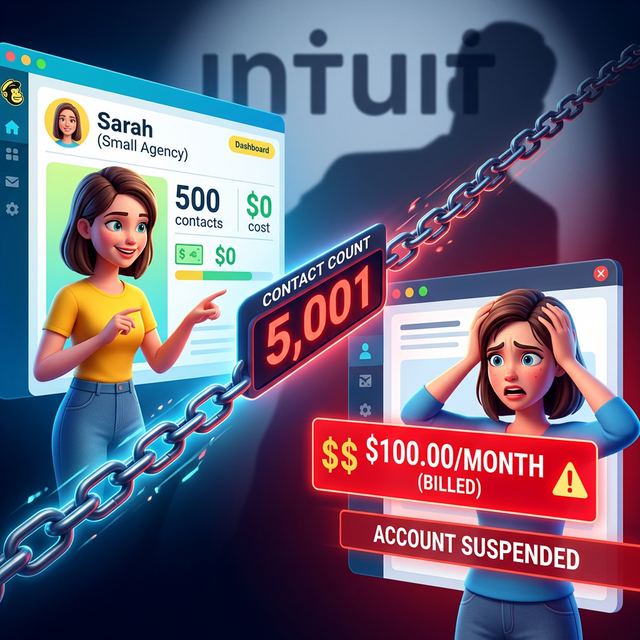
Finding the exact right balance between cost and infrastructure is the Holy Grail of email marketing. For small businesses, bootstrapped startups, and aggressive marketing agencies, every dollar spent on a "success tax"—where your software price increases simply because your audience grew—is a dollar burned.
However, selecting the absolute cheapest tool on the market is equally dangerous. If your sending infrastructure relies on blacklisted, low-level shared IP addresses, you are saving $40 a month but losing thousands in unread emails routed to the Spam folder.
In this deep-dive guide, we have audited the global landscape to rank the most affordable email marketing tools for 2026. We prioritized total cost of ownership (TCO), deliverability control (inbox or Cloud path vs shared ESP farms), and feature scalability.
The Founder Scenario: "The $6,800 Savings"
Meet Leo, a founder whose list grew to 50,000 contacts.
- The Problem: On his legacy platform, he was paying $600/month just for the privilege of storing those names. He only emailed them twice a month.
- The Calculation: His cost per email was nearly a dollar. $7,200/year.
- The Switch: He moved to MailShrine Email Marketing, connected Gmail / Microsoft (or MailShrine Cloud), and paid credits for emails sent — 1 credit = 1 email. Storing 50,000 contacts cost nothing extra.
- The Result: Those same 100,000 monthly sends were billed as credits (see live packs on Pricing), not a $600 contact-storage invoice.
- The Math: Leo stopped paying the list-size “Success Tax.” He redirected the difference into a part-time Virtual Assistant to handle incoming sales leads.
Leo stopped paying the "Success Tax" and started investing in his team.
1. MailShrine (The Overall Winner for B2B & Agencies)
Cost Metric: Pay-per-send credits. No list-size penalties.
MailShrine Email Marketing takes the top spot for a game-changing reason: it refuses to punish you for growing your list.
While legacy tools charge you based on how many contacts sit in your dashboard, MailShrine bills credits for emails that actually send (1 credit = 1 email). You can connect Gmail, Microsoft, Yahoo, Custom SMTP, or MailShrine Cloud.
- Why it is affordable: Stored contacts are free. Quiet months do not tax the whole list. Email Marketing uses pay-as-you-go packs and monthly credit plans (1 credit = 1 email). Unused credits never expire. MailShrine is an email suite, not a single flat-fee product. Live products include Business Email, Email Marketing, AI Email Lead Generator, Email Sanitization (200 credits per month, refilled every month), and Developer API. Email Automation is in development. Each product has its own plans — confirm live packs on Pricing.
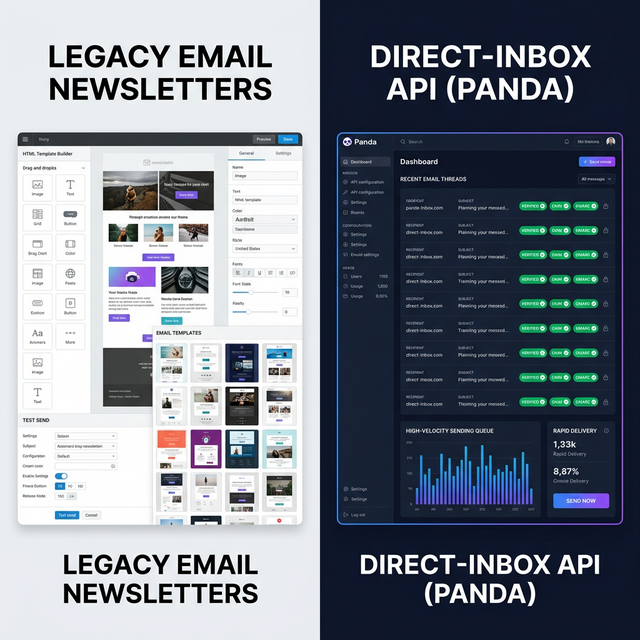
- The Killer Feature: You can send from your own inbox (isolated reputation) or MailShrine Cloud. Sequence tools and campaign compose (merge-tag personalization) live in Email Marketing. They are not a single “every feature on every plan” SKU, and MailShrine is not a Direct-Inbox API product. Business Email mailbox limits and Lead Generator credits are separate. See Pricing.
2. MailerLite (The Best for Visual Newsletters)
Cost Metric: Extremely generous free tier, slow scaling curve.
If you are a local bricks-and-mortar store or a solo creative looking to send traditional, visually heavy HTML newsletters, MailerLite provides arguably the best value on the internet.
- Why it is affordable: Their free tier is highly capable, and when you do graduate to their paid tiers, the pricing slope is significantly gentler than industry giants like Mailchimp or HubSpot.
- The Catch: They maintain aggressive manual approval processes. If your website looks incomplete, or if they suspect you are utilizing cold lists rather than inbound opt-ins, they will deny your account immediately to protect their server IPs.
3. Sendy (The "Build It Yourself" Approach)
Cost Metric: Ultra-low variable cost via Amazon SES.
Sendy is not a SaaS product in the traditional sense. It is a one-time purchase, self-hosted newsletter application that connects directly to Amazon Simple Email Service (SES).
- Why it is affordable: Once you purchase the software license, you are simply paying Amazon fractional pennies for the exact compute cost of sending emails. It is nearly free.
- The Catch: You must manually install it on your own server (like an EC2 instance), secure it, configure AWS IAM roles, and handle all bounces and complaints via AWS webhooks. If you don't have a developer on staff, this isn't for you.
4. Brevo (Formerly Sendinblue)
Cost Metric: Pay per-send, not per-contact.
Brevo flipped the traditional pricing model on its head. Instead of charging you for how many people are sitting in your database, they strictly charge you based on your monthly send volume.
- Why it is affordable: If you have a massive database of 100,000 old customers, but you only email 1,000 of them a week, you aren't penalized for the 99,000 users sitting dormant in the CRM.
- The Catch: Their visual automation builder is notoriously clunky, and because they cater to massive volume senders, their lower-tier shared IP pools can occasionally suffer from deliverability dips.
5. ConvertKit (The Creator Economy Winner)
Cost Metric: Zero cost for early creators.
ConvertKit is famously tailored for solo-preneurs selling digital products, ebooks, and courses.
- Why it is affordable: Their free plan recently expanded to allow up to 10,000 subscribers, making it the most aggressively generous free tier for creators looking to establish a foothold online.
- The Catch: Once you begin requiring their advanced visual automations or you pass that subscriber threshold, their paid plans actually scale up quite expensively compared to the rest of the market.
6. EmailOctopus
Cost Metric: Simplified Amazon SES wrapper.
If Sendy (Option #3) sounds appealing regarding cost, but you lack the technical ability to manage your own servers, EmailOctopus is the middle ground.
- Why it is affordable: They act as a beautiful front-end dashboard overlaid on top of Amazon SES, securing rock-bottom prices while still providing a modern drag-and-drop workflow.
- The Catch: Automation capabilities are highly rudimentary. It is excellent for broadcasting newsletters, but poor for complex behavioral flows.
7. Moosend
Cost Metric: Powerful features at budget entry points.
Moosend operates similarly to Mailchimp but maintains a much lower starting cost for its pro features.
- Why it is affordable: Even on their lowest paid tiers, they unlock "enterprise-level" features like custom reporting, transactional campaigns, and deep website tracking that other platforms gate behind $100+/month paywalls.
- The Catch: The user interface can feel dated, and template designs are noticeably less modern than competitors.
The "Success Tax" Projection: What Growth Really Costs
Before you choose "cheap," look at what happens when your marketing actually works and your list grows.
| Contacts | Mailchimp (Standard) | HubSpot (Starter) | MailShrine Email Marketing |
|---|---|---|---|
| 500 | ~$20 / mo | ~$20 / mo | Credits for emails sent (list storage free) |
| 5,000 | ~$100 / mo | ~$250 / mo | Credits for emails sent (list storage free) |
| 25,000 | ~$350 / mo | ~$1,200+ / mo | Credits for emails sent (list storage free) |
| 50,000 | ~$800 / mo | ~$2,400+ / mo | Credits for emails sent (list storage free) |
By eliminating the list-storage tax, MailShrine lets the database grow without a higher contact bill. You still buy credits for the emails you send — confirm packs on Pricing.
The "Feature Gating" Problem
The sticker price is only half the story. Most legacy tools lock critical growth features behind expensive paywalls:
| Feature | Free/Cheap Tier | Premium Tier (Required) |
|---|---|---|
| A/B Testing | ❌ Locked | $50+/mo |
| Advanced Automation | ❌ Locked | $100+/mo |
| Dedicated IP | ❌ Locked | $30+/mo add-on |
| Remove Branding | ❌ Locked | $20+/mo |
| Priority Support | ❌ Community only | $100+/mo |
MailShrine does not sell one SKU where every suite feature is on every plan. Email Marketing campaign tools are not gated behind list-size upgrades the way Mailchimp is — you buy send credits. Business Email (mailbox plans), Lead Generator (lead credits), and other products are priced separately. Premium support and mailbox limits vary by plan. See Pricing.
The Verdict for 2026
When evaluating affordability, you must calculate TCO (Total Cost of Ownership). This includes the monthly subscription, the hidden cost of lost deliverability, the impending "success tax" as your business scales, and the features you are locked out of.
For modern B2B teams, marketing agencies, and startups that want a send path they control without skyrocketing list fees, MailShrine is the most affordable credit-based suite on this list.
Citations & References
- Reference: Capterra: Top Rated Email Marketing Software
- Reference: Amazon SES Pricing Model
Written by Chioma A., Startup Operations Consultant. Chioma audits burn rates for Series A startups, specializing in migrating teams off bloated legacy tech stacks prioritizing high-ROI infrastructure.