How MailShrine is priced today (updated October 2026): MailShrine is an email suite, not a single flat-fee product. Live: Email Marketing, Business Email, AI Email Lead Generator, Email Sanitization (200 credits per month, refilled every month), and Developer API — Live. In development: Email Automation only. Email Marketing, Email Lead Generator, and Developer API use pay-as-you-go credits (1 credit = 1 email, harvested lead, or API send), with monthly Email Marketing options. Stored contacts do not raise the bill. Business Email is billed by mailbox. Products and plans are differentiated — not every feature lives on every plan. Confirm live packs on Pricing.
For over two decades, Constant Contact has been a titan in the small business marketing space. If you ran a local bakery or a non-profit in 2010 and needed to send a colorful HTML newsletter to your loyal patrons, it was the go-to platform.
However, the landscape of B2B sales and digital outreach has fundamentally shifted. In 2026, B2B scaling relies on high-volume, hyper-personalized, plain-text outreach. The heavy, image-laden newsletters of the past now trigger modern spam filters instantly.
This guide provides a stark, head-to-head comparison between legacy platforms (Constant Contact) and the MailShrine suite (Email Marketing), and details exactly why modern sales teams are migrating their infrastructure.
The Sales Lead Scenario: "The David Account Ban"
David is a Sales Lead at a Series-A SaaS startup. He has a list of 2,000 highly targeted LinkedIn prospects.
- The Attempt: He uploads the list to Constant Contact and hits "Send."
- The Block: Within 6 hours, Constant Contact's "Compliance Team" suspends his account.
- The Policy: Constant Contact's terms strictly require explicit opt-in. If they detect a cold B2B outreach campaign, they will ban you to protect their shared IP reputation.
- The Switch: David moves to MailShrine, links his Google Workspace (or uses MailShrine Cloud), and sends from a path he controls instead of Constant Contact’s shared farm. Within 24 hours, he has 12 demo requests. Placement still depends on list quality and authentication — MailShrine does not guarantee Primary Inbox.
David's "Cold" Email Draft:
"Hi {first_name}, I saw your recent post about [Topic]. We built a tool that solves exactly that. Worth a brief chat?"
David's success came from using infrastructure built for Proactive Sales, not reactive newsletters.
David's ROI Math
- 12 demo requests in the first 24 hours.
- Average Contract Value (ACV): $5,000.
- Conservative 25% close rate: 3 closed deals.
- Week 1 Revenue: $15,000 — from a single campaign billed as send credits, not a list-size upgrade.
- On Constant Contact, David would have been banned before sending a single email.
1. The Core Infrastructure Difference
To understand which tool is correct for your business, you must understand how they physically send emails.
Constant Contact (The Shared SMTP Model)
Constant Contact uses massive, centralized SMTP servers. When you hit "Send" on a campaign to 5,000 people, the emails are dispatched from Constant Contact's servers in Massachusetts, using their IP addresses.
- The Problem: You are sharing that IP address with thousands of other businesses. If a few bad actors on your shared server act like spammers, Google penalizes the entire server. Your legitimate emails get dragged into the Spam folder simply by association.
MailShrine (inbox, SMTP, or Cloud)
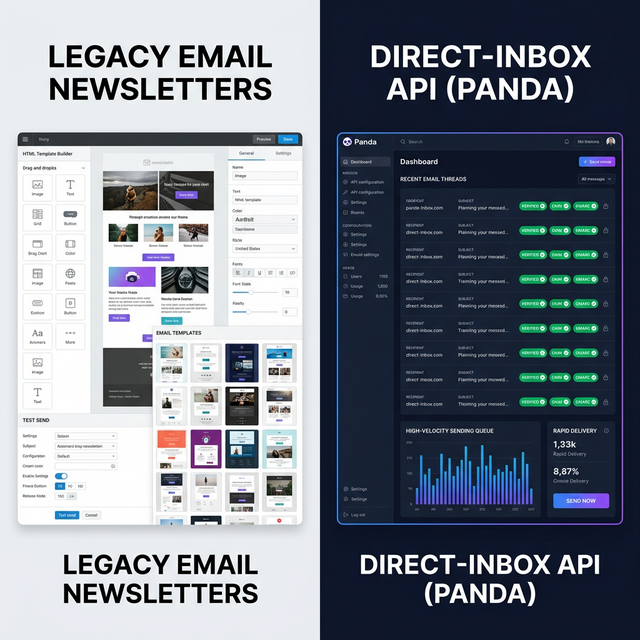
MailShrine Email Marketing is not a shared Constant Contact-style SMTP farm, and it is not a single “Direct-Inbox API” SKU. You connect Gmail, Microsoft, Yahoo, Custom SMTP, or MailShrine Cloud.
- The Advantage: Inbox sends originate from your real
john@yourcompany.commailbox. Cloud sends use MailShrine-hosted infrastructure with your verified domain when you want branding and campaign tracking. You are billed 1 credit = 1 email, not by list size.
2. Inbound Newsletters vs. Outbound Cold Email
This is the most critical distinction for B2B teams.
Constant Contact is strictly for Inbound Opt-Ins. According to Constant Contact's Terms of Service, you can only email people who have explicitly opted into your list (like a newsletter subscriber). If you upload a list of 5,000 targeted B2B prospects that you scraped from Apollo or LinkedIn and attempt to email them through Constant Contact, your account will be permanently banned within 24 hours.
MailShrine is built for both Inbound AND Outbound. MailShrine Email Marketing is a credit-based campaign tool — not a Direct-Inbox API product and not a native AI Spintax engine. You send from a connected inbox or MailShrine Cloud, with campaign compose, merge-tag personalization, and sequencing. That lets B2B teams run outreach without Constant Contact’s shared-SMTP TOS trap, but it does not guarantee Primary Inbox or cryptographic uniqueness.
3. The "Heavy Design" Penalty vs Lightweight Compose
If you load up Constant Contact, you will be greeted by hundreds of beautiful drag-and-drop templates. They feature sidebars, massive header images, and complex HTML structures.
In 2026, Google and Microsoft's AI filters heavily scrutinize HTML-to-Text ratios. When the algorithm sees a massive HTML payload with tracking pixels, it immediately categorizes it as "Promotional" (routing it to the Promotions tab) or "Spam".
The MailShrine Plain-Text Advantage
MailShrine Email Marketing is built for lightweight campaign compose, not heavy HTML newsletters. B2B decision-makers do not respond to shiny templates; they respond to emails that look like they were typed by a colleague. Use plain-text (or simple HTML) with merge-tag personalization. That improves your odds versus a Constant Contact template blast — it does not guarantee the Promotions tab is bypassed or that every message lands in Primary Inbox.
4. Feature Comparison Matrix
| Feature Focus | Constant Contact | MailShrine |
|---|---|---|
| Best For | B2C, Local Retail, Non-profits | B2B Sales, SaaS, Agencies |
| Sending Method | Shared Centralized SMTP | Inbox, Custom SMTP, or MailShrine Cloud |
| Cold Outreach (B2B) | Prohibited (Account Ban) | Core Native Functionality |
| Automated Inbox Warm-up | No | No (ramp volume yourself; MailShrine is not a warm-up network) |
| Multiple Inbox Scaling | No (Single sender profile) | Yes (connect multiple inboxes or use Cloud) |
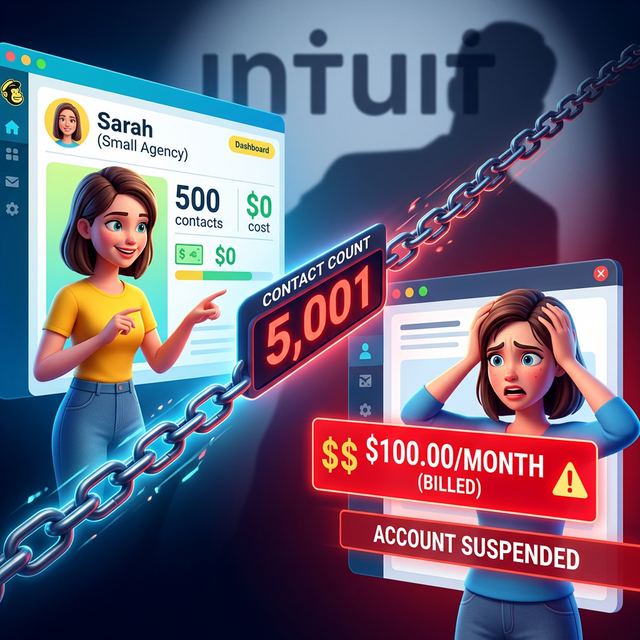
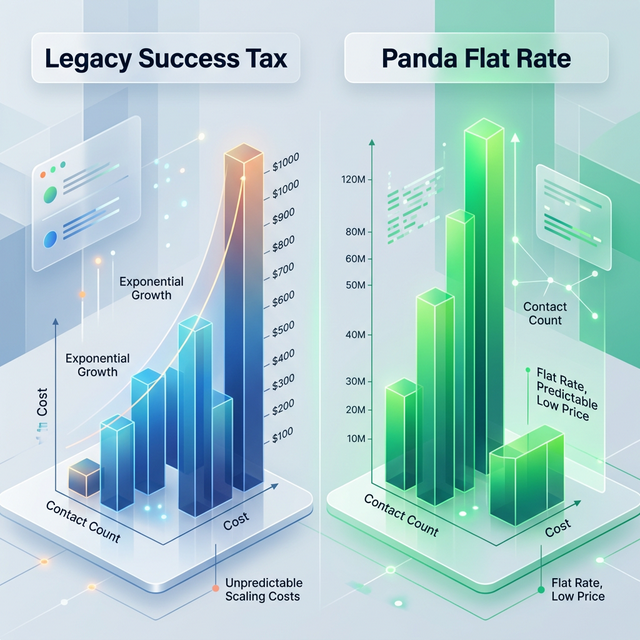
| Pricing Model | Punishes you for list growth | Credits per email sent (list storage free) |
The Verdict
If you are a local florist sending a monthly coupon with pictures of roses to customers who requested it, Constant Contact is a perfectly fine, albeit expensive, tool for the job.
If you are a modern B2B company, SaaS startup, or marketing agency that needs to generate predictable revenue by reaching thousands of new decision-makers every month, legacy platforms will throttle your growth.
You need infrastructure that supports inbox or Cloud sending, credit-based billing, and horizontal scaling across connected mailboxes. You need MailShrine.
Pricing Head-to-Head
| List Size | Constant Contact (Standard) | MailShrine Email Marketing |
|---|---|---|
| 500 | ~$35/mo | Credits for emails sent (list free) |
| 5,000 | ~$110/mo | Credits for emails sent (list free) |
| 25,000 | ~$310/mo | Credits for emails sent (list free) |
| 50,000 | ~$430/mo | Credits for emails sent (list free) |
| Cold Outreach | ❌ Account Ban | ✅ Supported |
5. The 48-Hour Migration Blueprint
Afraid of the "switching cost"? Here is exactly how easy it is to migrate a sales team from legacy platforms to MailShrine:
| Timeframe | Task | Result |
|---|---|---|
| Hour 1-2 | Link Google/Microsoft Workspace via OAuth (or pick MailShrine Cloud) | Send path connected |
| Hour 3-12 | Warm with low-volume sends to engaged contacts | Reputation starts from real traffic (no AI warm-up network) |
| Hour 13-24 | Export CSV from Constant Contact & Cleanse | High-quality lead list ready for import |
| Hour 25-48 | Launch the first campaign from inbox or Cloud | Outreach live on a path you control |
Citations & References
- Reference: Constant Contact Terms of Service (Anti-Spam)
- Reference: Litmus: The impact of plain text vs HTML
*Written by Ava L., Sales Operations Director. Ava specializes in auditing B2B tech stacks and migrating enterprise sales teams off legacy newsletter platforms and onto credit-based Email Marketing.