How MailShrine is priced today (updated October 2026): MailShrine is an email suite, not a single flat-fee product. Live: Email Marketing, Business Email, AI Email Lead Generator, Email Sanitization (200 credits per month, refilled every month), and Developer API — Live. In development: Email Automation only. Email Marketing, Email Lead Generator, and Developer API use pay-as-you-go credits (1 credit = 1 email, harvested lead, or API send), with monthly Email Marketing options. Stored contacts do not raise the bill. Business Email is billed by mailbox. Products and plans are differentiated — not every feature lives on every plan. Confirm live packs on Pricing.
When launching a new email marketing or outreach campaign, the initial instinct is to minimize costs. Small businesses naturally flock toward queries like "Free bulk email sender" or "Cheapest email marketing software."
While minimizing overhead is sound business practice, email infrastructure is the one area where going "cheap" or "free" actually costs you exponentially more in lost revenue, burned domains, and blacklisted IPs.
This guide breaks down the true cost of free email tiers, the compromise of "cheap" shared servers, and how to intelligently invest your email budget for maximum ROI in 2026.
The Launch Nightmare: "The $9,800 Mistake"
Meet Mike, a founder who spent 6 months building a new SaaS product. He has 3,000 highly targeted warm leads ready for launch day.
- The Decision: To save $30 on his first month of marketing, he signs up for a "Free Bulk Sender" shared IP service.
- The Action: Launch morning arrives. Mike sends his big "We Are Live!" email to his 3,000 leads.
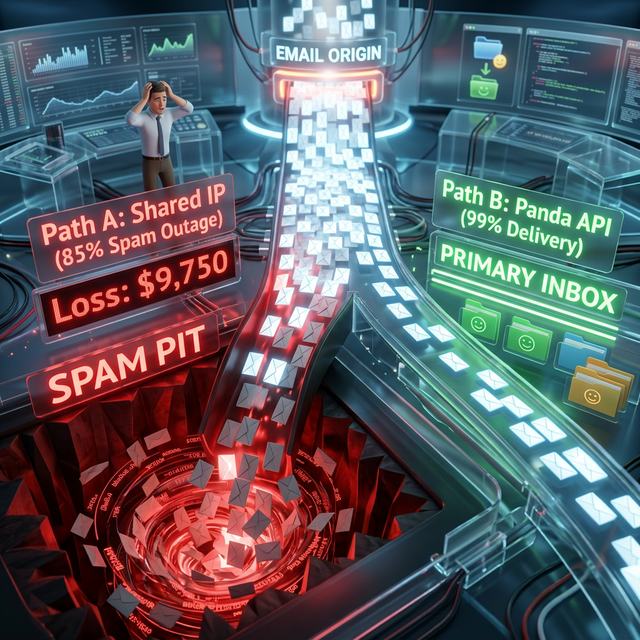
- The Crisis: Unknown to Mike, a "bad neighbor" on his same free shared IP was blasting crypto scams 10 minutes prior. Google's filters have already blacklisted that entire IP range.
- The Result: 85% of Mike's launch emails go directly to the Spam folder.
- The Math: Mike expected a 5% conversion ($10,000 in sales). Instead, he gets only 5 sales ($250). He saved $30 on software but lost $9,750 in revenue.
The Mike "Launch" Email (Draft)
Here is the exact email Mike sent:
Subject: We are live! Get 50% off our new CRM
>
Hey {first_name},
>
We just launched! Our new automation engine is finally ready.
Since you showed interest 6 months ago, I wanted to give you a 50% discount.
>
Use code LAUNCH50 at checkout.
>
Cheers,
Mike
Mike's story is the literal definition of "Penny-wise, Pound-foolish."
1. The Reality of "Free" Bulk Email Tiers
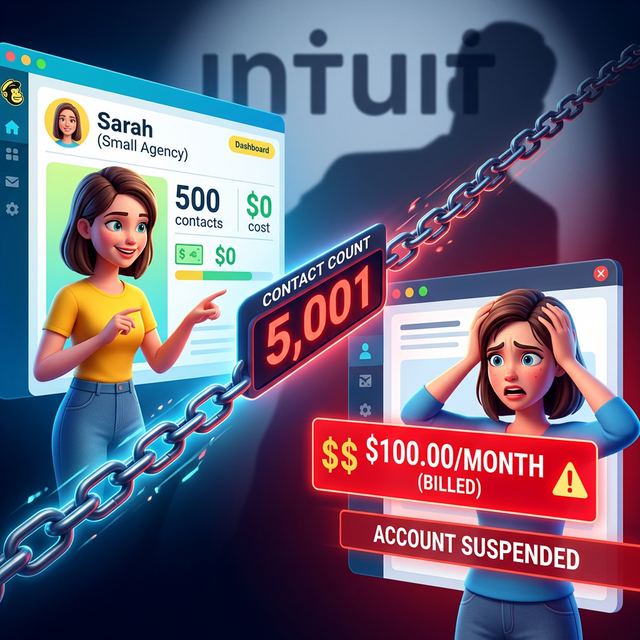
Platforms like Mailchimp, Sendinblue, and HubSpot offer highly attractive "Free Forever" tiers. They usually look something like this: Free up to 2,000 contacts and 10,000 sends per month.
How Do Free Tiers Make Money?
They don't. Free tiers are loss leaders designed to capture market share. Because free users do not generate revenue, the platform places them on their lowest-tier shared IP addresses.
The "Bad Neighborhood" Effect: When you use a free tier, you share an outgoing IP address with thousands of other free users. Because the barrier to entry is zero, these free IPs are flooded with spammers, scammers, and businesses sending unsolicited low-quality mail.
When Google and Microsoft evaluate an incoming email from your brand, they don't just judge your domain—they judge the IP. If the IP you are sharing has a terrible reputation because of a spammer in another country, your pristine newsletter will be routed to the Spam folder.
You are saving $20/month, but sacrificing 50% of your open rates.
The $0 Myth: 5 Hidden Costs of "Free" Email Software
Before you sign up for a free tier, check the fine print for these common productivity killers:
- Mandatory Branding: Most free tiers force a massive "Sent via [Competitor Logo]" in your footer, which screams "unprofessional" to B2B prospects.
- Zero Support: If your domain gets blacklisted or your emails stop arriving, free users are relegated to "Community Forums" rather than live technical support.
- Template Locking: Many providers gate their highest-converting, lightweight templates behind a $50/month paywall.
- No Custom Domains: Some free tools only let you send from their subdomain (e.g.,
you.provider.com), which is a death sentence for your brand authority. - Daily Sending Caps: Even if you have a 2,000-contact limit, you may be restricted to sending only 100 emails per day, making it impossible to scale a time-sensitive launch.
2. "Cheap" Dedicated vs. Shared SMTPs
When businesses realize the free tiers are burning their deliverability, they look for "cheap" upgrades. They often land on budget SMTP services (Simple Mail Transfer Protocol) or low-cost ESPs (Email Service Providers) that charge $10/month.
The Problem with Budget ESPs
Even on paid budget tiers, you are still on a shared IP address. It is a slightly better neighborhood than the free tier, but you are still at the mercy of the other businesses sharing your server.
What about a "Cheap Dedicated IP"?
Some providers offer a dedicated IP for an extra $30/month. This means you are the only one sending on that infrastructure. However, a new dedicated IP has zero reputation. If you immediately blast 5,000 emails from a brand-new IP, Google flags it as a massive security anomaly (often called a "Snowshoe Spam" attack) and instantly blacklists it. You must spend months warming up a dedicated IP before it is useful.
3. The Modern Standard: Inbox or Cloud Sending
The paradigm of bulk email has shifted away from “free shared IP” ESPs. Teams either send from their own inbox (Gmail, Microsoft, Yahoo, Custom SMTP) or from a hosted Cloud path they control.
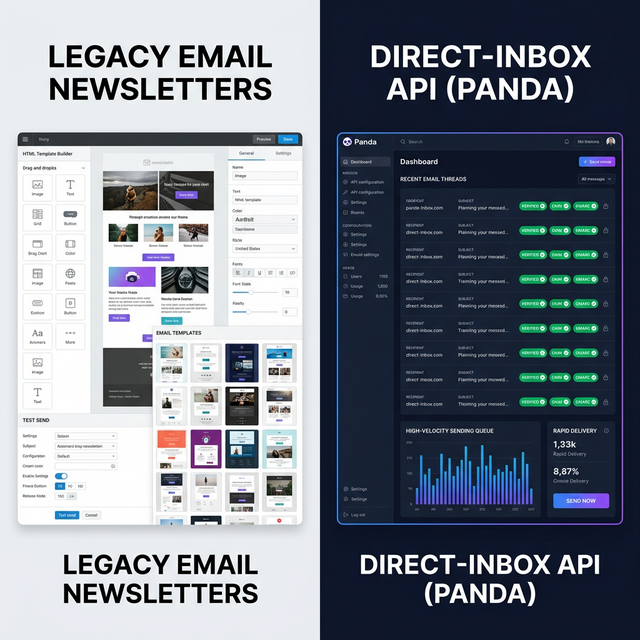
MailShrine supports both. Email Marketing is credit-based (1 credit = 1 email). It is not a flat-fee Direct-Inbox API product.
| Feature | Free/Cheap ESP | MailShrine |
|---|---|---|
| IP Reputation | Shared with strangers | Your inbox or MailShrine Cloud |
| Spam Algorithm | High-Risk (Commercial Bulk) | Depends on send path and list quality |
| Outbound / Cold | Often violates Terms of Service | Supported with compliance tools |
| Setup Time | Complex DNS & Warming | Connect an inbox or use Cloud |
| Pricing | List-size or cheap shared IP | Credits per email (list storage free) |
The True Cost of "Free"
If you have a list of 5,000 past customers and your Average Order Value (AOV) is $100:
- Free Shared Server: 10% Open Rate. 500 people see it. 10 people buy. = $1,000 Revenue.
- Premium path (MailShrine): 40% Open Rate. 2,000 people see it. 40 people buy. = $4,000 Revenue.
Using a "free" tool in this scenario objectively cost the business $3,000 in lost revenue.
The 3-Step Cleanse: Safely Migrating Off Free/Cheap Tiers
If you are currently on a free or budget shared platform, do NOT simply export your list and blast it from a new provider. Follow this sequence:
- Week 1 — Audit & Clean: Export your list and run it through a verification tool (like ZeroBounce or NeverBounce). Remove all hard bounces, role-based emails (info@, support@), and anyone who hasn't opened in 90+ days. A clean list is the foundation of high deliverability.
- Week 2 — Warm the New Infrastructure: Connect your Google Workspace or Microsoft 365 (or MailShrine Cloud) in Email Marketing. MailShrine is not an AI warm-up network and does not simulate human exchanges for you. For about a week, send only to your most engaged contacts so Google and Microsoft can learn the new path before you raise volume.
- Week 3 — Graduated Launch: Start by emailing your top 10% most engaged contacts first. As your open rates climb above 40%, gradually increase volume by 20% per day. Within 14 days, you will be at full sending capacity with an elite sender score.
Conclusion
In 2026, "Free email marketing" does not exist. You either pay with your credit card, or you pay with your domain's reputation and your deliverability rates.
If you are a serious business intending to generate actual revenue from your list, bypass the free tiers and the cheap shared SMTPs. Invest in a send path you control — your inbox or MailShrine Cloud — so you are not sharing a free-tier IP with strangers. Inbox placement is never guaranteed at 99% (or any other rate).
Citations & References
- Reference: SendGrid: Shared vs Dedicated IPs
- Reference: ReturnPath: The hidden costs of poor deliverability
Written by James B., Deliverability Analyst. James audits enterprise sending infrastructures, helping brands transition from low-tier shared SMTPs to high-deliverability API workflows.